A ranch-house neighborhood growing older gracefully
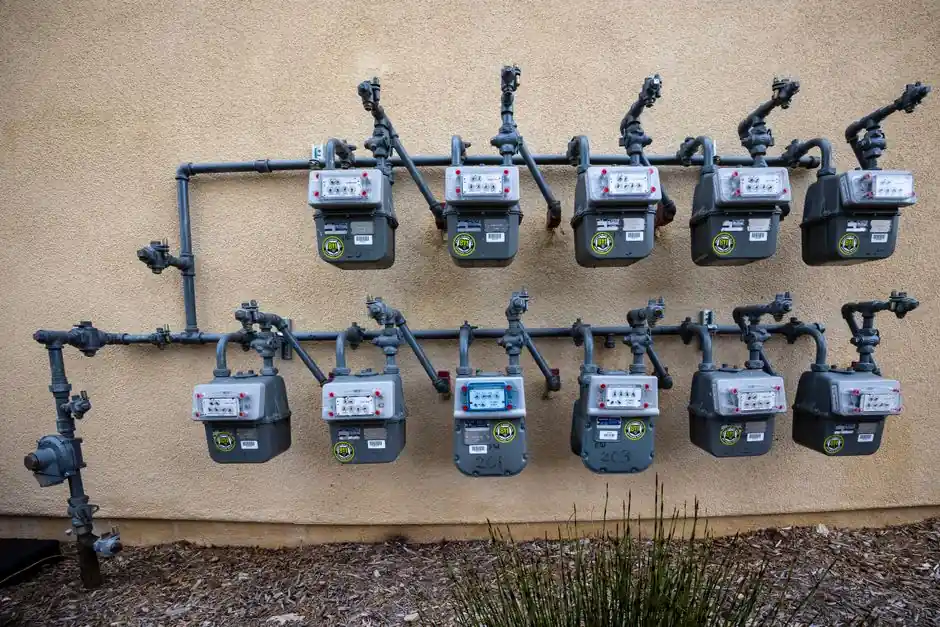
Sunset Acres was built in the decades when San Marcos was still a small college town, and its ranch homes reflect that era completely: low profiles, attached garages, big oaks in every yard, and gas service run in steel pipe to a wall furnace, a range, and a water heater. Those systems were well built for their time — but their time was sixty-plus years ago. Steel piping in soil has a finite life, threaded joints fatigue, and protective coatings from the 1960s were not designed for what we now know about this ground. The result is a neighborhood where a large share of gas infrastructure is operating past the age its designers expected, and where the difference between a system with years left and one ready for renewal comes down to a careful, honest inspection.
The trees are the neighborhood's glory and its gas lines' slow-motion challenge. Mature live oaks and pecans — some planted when the houses were new — have root systems that have spent decades exploring the same soil the gas lines run through. Roots do not hunt for gas pipe specifically, but they follow moisture and exploit every weakness: they press against buried runs, displace bedding, and work into joints and coatings over the years. A line that was perfectly bedded in 1962 can be riding on a root crown today, flexing every time the wind moves a two-ton canopy. In Sunset Acres, any gas assessment that ignores the trees is only doing half the job.
Then there is what six decades of ownership does to a house. Sunset Acres homes have been remodeled in waves — a kitchen update in the eighties, a bathroom added in the nineties, a patio cover and outdoor grill sometime after that — and each wave touched the gas system a little. Branches were extended, appliances swapped, a line capped here and rerouted there. Few owners kept records. The result is gas systems with layered history: original steel beside newer copper, old valves beside new connectors, and routing that made sense to three different remodelers across forty years. Untangling that history — tracing every branch, testing every joint, documenting what is actually there — is the core of gas work in this neighborhood.
The ground itself has been working on these lines the whole time. Sunset Acres sits on Blackland Prairie clay, and sixty years of Central Texas weather means sixty cycles of swell and shrink around every buried fitting. The clay here is deep and active: wet springs heave it, dry summers crack it open, and buried gas lines ride the movement year after year. Fittings that were tight in 1975 have absorbed thousands of micro-movements since. Add the root pressure from the canopy above, and it is remarkable these systems have lasted as well as they have — a testament to the original work, and a reason not to push luck further without inspection.
What Sunset Acres does not have is turnover to force the issue. These are longtime owners, not landlords on a leasing calendar — which means gas systems get attention when something prompts it, not on a schedule. The prompts we see: a water heater replacement that reveals corroded piping, a remodel that uncovers a questionable branch, a faint odor near the meter, or a neighbor's project that makes an owner wonder about their own lines. Our role here is straightforward: bring the professional eye these systems have waited decades for, give owners a clear picture of what they have, and fix what needs fixing with work that respects both the house and its history.