Gas Line Repair in Kissing Tree, San Marcos, TX
Kissing Tree is San Marcos's 55-and-better active adult community — some 1,332 acres near Centerpoint and Hunter Roads with single-story homes, an 18-hole golf course, resort-style pools, and a full social calendar. Residents chose it for freedom: lock-and-leave travel, golf over yard work, and neighbors who share the stage of life. Gas lines here serve that lifestyle — fireplaces, cooktops, outdoor living, and amenity-scale equipment. We provide careful, code-aware gas line repair, installation, and leak detection across Kissing Tree, with work tuned to single-story slab homes, systems that sit unattended during travel, and service explained clearly and done tidily.
About this area
Why gas line repair in Kissing Tree matters
Why we serve here
Kissing Tree residents did not move here to manage house problems — they moved here for golf, pickleball, trail walks, and dinner with friends. That changes what good service looks like: appointments kept sharply, work areas left spotless, explanations in plain language, and scheduling that respects an active calendar. Many residents also travel for weeks at a time, which makes preventive inspection far smarter than emergency response. We serve Kissing Tree because a lock-and-leave lifestyle needs a contractor who thinks ahead, communicates clearly, and treats every home like someone's hard-earned ease.
In Kissing Tree, gas lines serve a resort lifestyle — and the active-adult rhythm changes how they are cared for
Kissing Tree broke ground as San Marcos's first age-restricted development — a Brookfield Residential community planned for some 3,200 homes across 1,332 acres near Centerpoint and Hunter Roads, reached off I-35 at exit 200. It is built as a resort you live in: an 18-hole golf course, a putting course, indoor and outdoor pools, a fitness center, tennis and pickleball courts, an on-site restaurant, a social gathering hall, and miles of hike-and-bike trails — with the land's Stringtown heritage, dating to 1847, honored in a Texas historical marker at the entrance. The homes are single-story by design, and natural gas does the daily work: heating, cooking, fireplaces, and outdoor living. It is a community where the gas system quietly supports a very full life.
The single-story slab design defines Kissing Tree gas work. Without basements or crawl spaces, gas service runs are shorter and more direct than in two-story homes — typically buried to the house, then routed through walls and attic spaces to each appliance. That simplicity is a genuine advantage: fewer hidden runs, easier access, faster diagnosis. The homes are new construction from 2017 onward, so the piping is modern throughout. But single-story living concentrates everything on one level — the fireplace, the cooktop, the water heater all share compact runs — which means sizing and pressure matter in tight quarters, and a small issue announces itself quickly in a home with no upstairs to buffer it.
The ground under Kissing Tree is Blackland Prairie clay, graded into community pads as the phases were built. Like all expansive clay, it swells after heavy rain and contracts through drought, working buried pipe at joints and risers with each cycle. The community's extensive irrigation — golf course, common areas, home landscaping — keeps some zones consistently moist while others bake, creating uneven soil movement across short distances. Drainage from the golf course and trail corridors also shapes where water goes after storms. Gas work here respects that engineered landscape: proper depth, sound bedding, and an eye on how water moves across a community designed as carefully as its homes.
Kissing Tree's year has its own rhythm, and much of it involves travel. Winter is the critical season: residents head out for weeks while occasional hard freezes threaten outdoor risers, grill stubs, and pool equipment lines left behind — a frozen, burst-adjacent line discovered on return is the scenario preventive inspection exists to avoid. Spring storms test drainage and can expose shallow runs where erosion cuts in along trails and common areas. Summer brings peak heat, with air conditioning and pool equipment running hard and clay shrinking away from pipe bedding. Fall is the ideal service window: a pre-season inspection and pressure test before heating season, timed before holiday travel begins. For a community that locks and leaves, the calendar — not the crisis — should drive gas maintenance.
The signature Kissing Tree feature is the fireplace. In single-story homes built for gathering, the gas fireplace is a daily-use centerpiece through the cooler months — and its supply line, valve, and burner assembly see more cycles than the same components in a typical home. Fireplaces that soot, struggle to stay lit, or burn unevenly often trace back to the gas supply side: pressure, restriction, or a worn component in the line's path. Beyond the hearth, low-maintenance living means residents rightly expect turnkey service — no mess, no jargon, no callbacks. Our approach matches that expectation: we verify with pressure testing before recommending anything, explain findings in plain terms, coordinate Texas811 locating before any digging, handle permits and inspections where they apply, and leave the home exactly as we found it.
Services available
Gas line repair services in Kissing Tree
Kissing Tree homes need gas line work shaped by active-adult living: fireplaces and cooktops that see daily use, systems prepared for extended travel, and repairs explained clearly and completed tidily. We handle all of it — from the meter to the mantel — with diagnosis first, digging second, and communication that respects your time.
Gas Line Repair
Gas line repair in Kissing Tree often centers on the home's hardest-working gas features — a fireplace supply line with a restriction, a cooktop branch that cannot hold pressure, a riser weathered by seasons of exposure. Single-story slab construction keeps runs accessible, so diagnosis is quick and repairs are contained. We pressure-test to find exactly what is wrong, fix only that, retest before restoring service, and leave the work area spotless.
Gas Line Installation
From gas fireplaces and log sets to outdoor kitchens, patio heaters, and grill lines, we size and route new gas piping for Kissing Tree homes. Every run is calculated against the home's real connected load, installed at proper depth through community-graded clay, and built to current code — with pressure testing, permits and inspections where required, and documentation before anything goes into service.
Gas Leak Detection
For residents who travel, an undetected leak is the nightmare scenario — a problem growing for weeks in an empty house. We combine electronic gas detection with pressure testing to find leaks at fireplaces, along buried runs, and around outdoor connections, then explain plainly what is leaking, where, and what the fix involves. If you smell gas, the rule never changes: ventilate, avoid flames and switches, and call immediately.
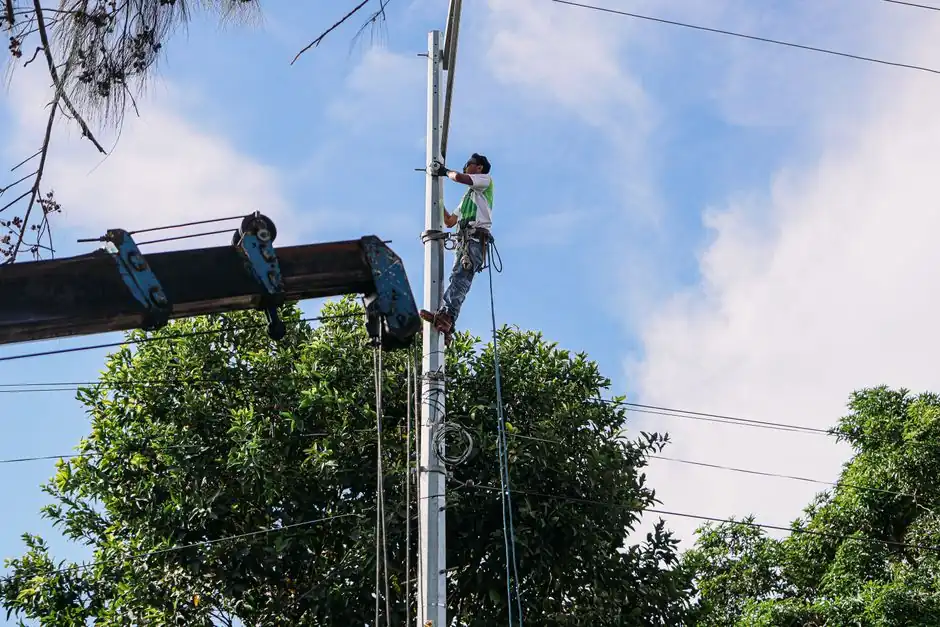
How we work locally
How gas line repair is executed in Kissing Tree
Challenge: Gas systems sitting unattended during extended travel
Lock-and-leave is the Kissing Tree way — weeks away visiting family or escaping summer heat. But a gas system does not pause when you leave: a slow weep at a fitting, a riser joint working loose in shifting clay, or a line disturbed by common-area work can develop for weeks with nobody home to notice the signs. Small gas issues are cheap when caught; they are expensive when they age unattended.
Challenge: Fireplaces as daily-use centerpieces
In Kissing Tree, the gas fireplace is not decoration — it is where the household gathers through fall and winter, running far more hours than a typical fireplace. That duty cycle wears the supply side: valves cycle thousands of times, burner assemblies collect debris, and any pressure or restriction issue in the supply line shows up as soot, weak flames, or a fireplace that will not stay lit. The symptom looks like an appliance problem; the cause is often in the gas line feeding it.
Where we work
Case files
Single-story home off Dancing Oak Lane — fireplace that would not stay lit
A resident's gas fireplace had become unreliable through the heating season — lighting, then dropping out, with soot building on the logs. Two winters of annoyance had been chalked up to a finicky fireplace, but the pattern pointed at the supply side: something between the branch line and the burner was starving the flame.
We pressure-tested the fireplace branch and measured supply pressure at the unit, which revealed a restriction in the supply piping compounded by a worn valve. The restricted section and valve were replaced with properly rated components, the line was retested, and the burner assembly was checked to confirm the flame pattern was clean and even before we left.
The fireplace now lights and holds a steady, clean flame, the sooting has stopped, and the resident has a documented service record for a feature that gets daily use every winter.
Returning travelers — dying grass strip found after weeks away
A couple returned from an extended trip to find a strip of yellowing grass tracing a line across their side yard — a change that had clearly developed while they were gone. With no one home to catch it early, a textbook buried-leak signature had been growing for weeks along the service run.
We pressure-tested the system, which confirmed a leak, then used electronic locating to trace the buried run and pinpoint the failing section without disturbing the whole yard. Only that section was exposed and replaced, the system was retested end to end, and we walked the homeowners through pre-trip inspection options for their next extended absence.
The leak was eliminated with a single contained excavation, the rest of the landscaping was untouched, and the homeowners left with a travel-season plan so the next trip starts with a documented sound system.
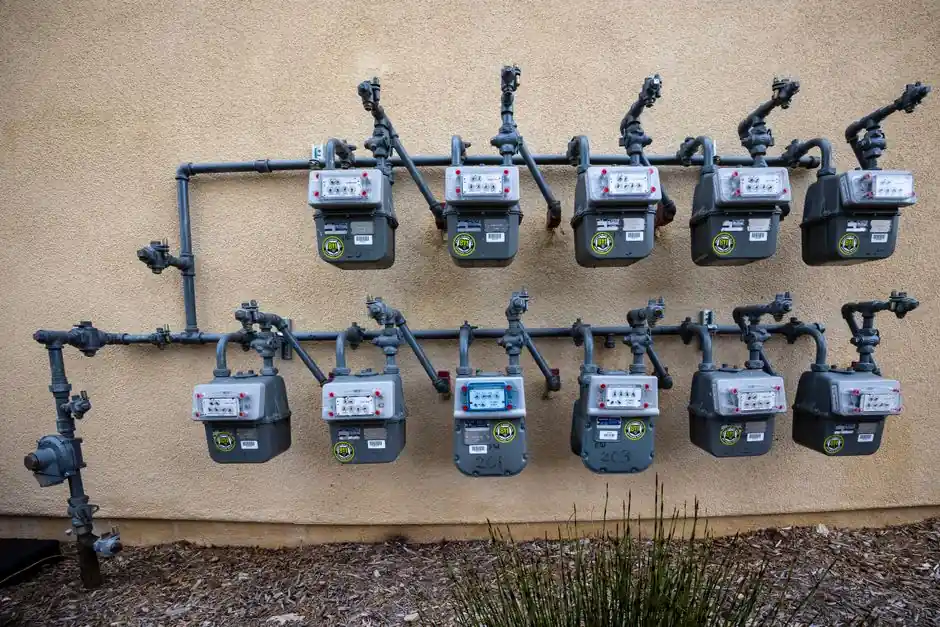
Field evidence from Kissing Tree
Active-adult gas work: tidy, thorough, and clearly explained
Kissing Tree has shaped how we think about service itself. We have traced fireplace supply restrictions behind sooting burners, found buried leaks for returning travelers with a single precise excavation, pressure-tested systems before long trips, and sized patio gas additions for homes where outdoor living is a way of life. The technical work is the same discipline we bring everywhere — locate, test, fix exactly what is wrong — but the delivery is tuned to the community: sharp appointments, spotless work areas, plain-language explanations, and documentation you can file without a second thought. In a 55+ community, trust is earned through clarity, and we work to earn it on every visit.
Local questions
We travel for weeks at a time — what should we do about our gas system?
Make inspection part of your travel routine. A pre-trip visit with a pressure test documents your system as sound on the day you leave, which is the best possible starting point. Know where your main gas shutoff valve is — and make sure someone you trust knows too. When you return, take a short walk around the house: look for new dead vegetation strips, listen near the meter, and note any gas odor. If anything seems different, call for a check before settling back in. An unattended system deserves scheduled attention, not crossed fingers.
How often should my gas fireplace's supply line be checked?
Once a year, before heating season — especially in Kissing Tree, where fireplaces see far more use than average. The check covers supply pressure, the condition of valves and fittings along the branch, and the burner assembly's flame pattern. Soot buildup, flames that will not stay lit, or uneven burning between uses are all reasons to call sooner. Annual fireplace gas service is inexpensive prevention for the home's hardest-working gas feature.
What factors affect the cost of gas line work in Kissing Tree?
Active-adult community jobs are shaped by scope and access: the length and depth of the run, how much finished landscaping must be preserved, the load calculation for fireplaces or outdoor additions, and the condition of the existing piping being tied into. Single-story slab construction often keeps access straightforward, which helps. Permit and inspection requirements apply depending on the work. A proper on-site assessment is the only way to price the actual job, so treat any quote given without a site visit with skepticism.
Do Kissing Tree's single-story homes make gas line work simpler?
In most cases, yes. Without basements or crawl spaces, service runs are shorter and more direct, buried lines reach the house without complex routing, and interior piping is accessible through walls and attic spaces rather than buried under a second story. That means faster diagnosis, more contained excavations, and less disruption. It does not mean the work is casual — the same pressure testing, code compliance, and permits apply — but the home's design works in everyone's favor.
Safety & compliance
Trust and compliance
In a 55+ community, clarity is a safety measure. We follow current fuel-gas code requirements on every Kissing Tree job, coordinate Texas811 utility locating before any excavation, handle permits and inspections where they apply, and pressure-test every repair before gas is restored. We explain findings in plain, unhurried language and put everything in writing — because the people living with the system should understand it fully, and because trust here is built one clear explanation at a time.
Signs you need gas line repair in Kissing Tree
Kissing Tree's travel rhythm means gas trouble can develop while no one is watching — which makes the signs worth knowing even more important. These are the ones to act on.
1. A gas odor in or around the home
The rotten-egg smell of mercaptan means act immediately, every time. In Kissing Tree it may appear at a fireplace that has been running all season, near an outdoor grill stub, or along a buried run after time away. Note that sense of smell changes with age — if family or guests mention an odor you cannot detect, believe them. Ventilate, avoid flames and switches, and call for professional help.
2. A fireplace with weak, uneven, or sooty flames
A healthy gas fireplace burns blue and even. Yellow tipping, soot on logs or glass, flames that will not stay lit, or one side burning stronger than the other often trace back to the gas supply — pressure, restriction, or a worn valve. If your fireplace's behavior has changed, the supply line deserves a look before the next cold snap.
3. A strip of dead or yellowing grass along the buried line's path
After returning from travel, walk the yard. A narrow band of struggling vegetation running from the meter toward the house is the classic signature of a buried leak — and in an empty house it may have been developing for weeks. Do not wait to see if it recovers; have it investigated.
4. Appliances behaving differently after time away
If the cooktop, water heater, or fireplace acts differently when you return — weaker flames, slower hot water, odd behavior you did not see before leaving — something may have changed while you were gone. A pressure test will tell you quickly whether the system still holds.
5. Corrosion or weathering on outdoor risers and grill stubs
Kissing Tree's outdoor living means more exposed gas piping than average — grill stubs, patio heater connections, pool equipment lines. Check them seasonally for rust, pitting, or green corrosion on brass fittings. Weathered outdoor piping is the visible edge of the system; what you can see tells you about what you cannot.
6. An upcoming extended trip — schedule the inspection first
The best sign is the one you create yourself: a pre-trip inspection with a pressure test before weeks away, especially heading into freeze season. It documents a sound system, identifies anything marginal before it ages unattended, and lets you travel without the question hanging over the house.
Reliable gas line repair in Kissing Tree
Whether it is a fireplace that has stopped behaving, a system check before weeks of travel, or a leak discovered on return, Kissing Tree's homes deserve gas work as unhurried and thorough as the lifestyle. Call today for careful, code-aware gas line repair, installation, and leak detection anywhere in the community.
Request service